
Breadcrumbs
These links will help you get back to where you want to go faster.
Common Lock Problems and How to Fix Them: The Essential Guide for Maricopa Homeowners
Home locks might seem simple, but they are precision-engineered devices subject to complex physical forces and environmental challenges. For Maricopa homeowners, the intense Sonoran Desert heat, persistent dust, and seasonal weather introduce unique stresses that can cause even the best locks to malfunction. Understanding these underlying causes, along with effective DIY solutions and when to call professionals, can save time, money, and frustration while maintaining the security of your home.
Looking for a local and reliable locksmith? Save 50-80% on Locksmith Services such as Auto Lockout, Auto Remote Key Duplication, Mailbox Locksmith, Rekey, Home Lockout, and Commercial Locksmith. Call 602-369-1553 or 520-303-1022, or schedule an appointment online.
What you will learn in this article
– Maricopa homeowners face unique lock issues due to extreme heat, desert dust, and seasonal weather affecting lock performance and durability.
– Locks consist of precision components that can be disrupted by thermal expansion, abrasive dust, and material wear.
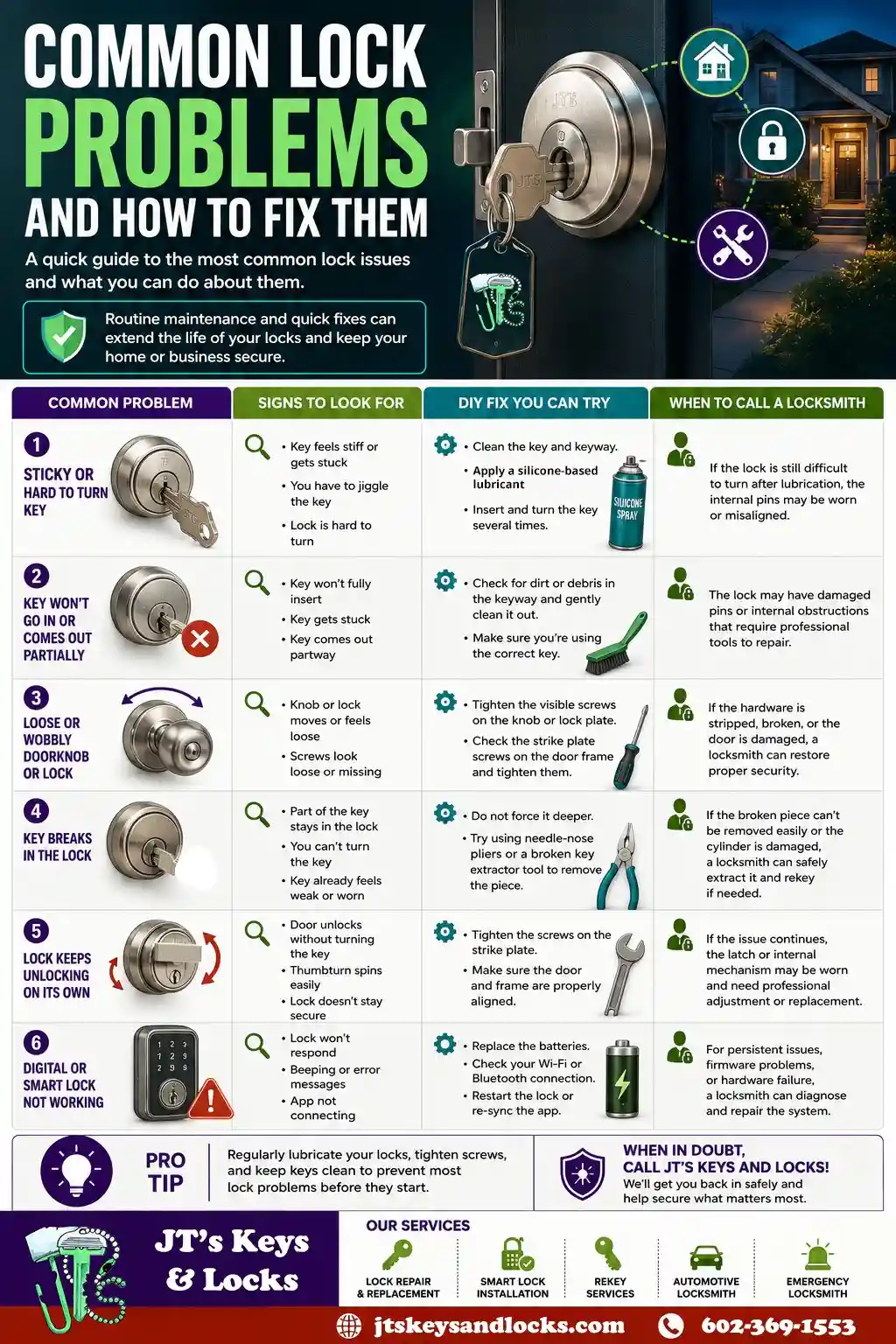
– Common lock problems include: thermal expansion, dust and lubrication issues, broken keys, misaligned deadbolts and loose or spinning handles.
– Routine maintenance tips for common lock problems.
The Science Behind Lock Malfunctions in Maricopa
The typical mechanical lock combines intricately designed components such as brass cylinders, steel pins, compression springs, and wooden or metal frames—each with precise tolerances often measured in thousandths of an inch. However, in Maricopa’s harsh desert environment, factors like extreme heat and airborne desert dust complicate this otherwise smooth operation. Materials expand differently with temperature fluctuations, while fine silica particles infiltrate lock chambers, increasing friction and wear.
Before rushing to replace faulty locks, it’s important to grasp the physical principles driving common issues such as stiff locks, broken keys, and misaligned deadbolts. This knowledge empowers homeowners to undertake effective preventive maintenance and timely DIY repairs, while also recognizing when professional locksmith intervention is essential.
Common Lock Issues and Proven DIY Solutions
1. Thermal Expansion Causing Sticky or Hard-to-Turn Locks
One prevalent problem in Maricopa summers is the “Desert Thermal Bind,” where door locks or latches stick or refuse to turn under intense heat. This occurs because varying materials in the door assembly—brass lock cylinders, steel bolts, aluminum panels, and wood framing—expand at different rates when heated, leading to binding friction or tight clamping of the keyway.
To diagnose, perform the “Door-Open Test”: open your door fully and try turning the key or handle. Smooth operation with the door open indicates that heat-induced frame expansion is causing the problem, not the lock mechanism itself.
Simple adjustments can often relieve this binding. When closing the door, gently pull inward or lift the handle slightly to center the latch within the strike plate. Additionally, check and tighten the top and bottom hinge screws, as thermal cycling can loosen these over time, causing misalignment.
However, if thermal expansion has permanently warped your door or deadbolt alignment, forcing the lock risks breaking the key. In such cases, contact professionals like JT’s Keys and Locks for strike plate repairs or enlargements.
2. The Gritty Keyway: How Dust and Improper Lubrication Create Lock Friction
Tribology—the study of friction and wear—plays a central role in understanding why some locks feel stiff, scratchy, or difficult to turn. Maricopa’s fine desert dust, rich in abrasive silica and quartz particles, can infiltrate the sensitive pin-tumbler mechanism inside locks.
Worse, using wet lubricants such as WD-40 or cooking oil can trap dust, forming a gritty slurry that jams the pins and increases friction. This glaze coats the pin shafts, resulting in a seized or unresponsive lock cylinder.
To reverse this, thoroughly flush the lock’s internal chambers using quick-drying, solvent-based cleaners like electrical contact cleaner or isopropyl alcohol. Avoid adding more wet oils afterward.
Instead, apply a dry lubricant or a dry PTFE/silicone spray to reduce friction without attracting dust. Working your key in and out multiple times helps distribute this lubricant evenly.
If these steps fail to restore smooth operation, internal components might be damaged or springs may have weakened. Skilled locksmiths from JT’s Keys and Locks can perform an in-depth cylinder teardown, cleaning, and a precision rekeying service to restore functionality.
3. Broken Keys and How to Safely Extract Them
Keys endure torsional shear stress every time they are turned; over time, microscopic metal fatigue can cause keys to snap inside the lock. The weakest point is usually the deepest cut, where the metal is thinnest and most vulnerable.
If a key breaks, stop turning immediately to avoid jamming the mechanism further. Apply a dry lubricant around the broken fragment to reduce friction and attempt extraction only if a portion of the key protrudes past the lock face.
Use fine needle-nose pliers or specialized spiral extractors to carefully pull the broken key straight out without twisting. Avoid using adhesives or unsafe tools that risk pushing fragments deeper or damaging internal components.
When the broken key sits flush inside the cylinder, trust certified locksmith professionals. JT’s Keys and Locks employs precision extraction tools and expert techniques to remove broken keys without harm to your lock’s delicate springs and pins.
4. Misaligned Deadbolt Strike Plates Preventing Proper Locking
Deadbolts rely on precise vector alignment to slide smoothly into the strike plate mounted on the door frame. Over time, house settling or heavy usage can cause your door to sag, making the bolt strike the solid steel plate instead of entering the slot cleanly.
Identify the friction point by applying chalk or lipstick to the deadbolt’s tip, then closing the door and turning the lock. The resulting mark on the strike plate pinpoints where contact obstructs bolt movement.
Minor adjustments include tightening hinge and faceplate screws and using a metal file to widen or reshape the strike plate opening slightly. However, if misalignment exceeds 1/16 inch or recurs frequently, professional reinforcement is recommended.
JT’s Keys and Locks upgrades strike plates with heavy-duty hardware featuring 3-inch structural screws embedded deep into framing studs. This not only corrects alignment but significantly enhances door security by resisting forced entry.
5. Loose or Spinning Door Handles from Backed-Out Screws
Daily use and vibrations gradually loosen the interior mounting screws (escutcheon screws) that secure handles and lock cylinders, causing them to feel wobbly or spin without engaging the latch.
Inspect the interior side of your handle or deadbolt plate to locate these mounting screws. Some modern hardware conceals them behind snap-on faceplates, which can be carefully removed with a flathead screwdriver.
Re-align the spindle connecting the handles and latch mechanism, then evenly tighten the screws by hand. Avoid power tools that risk over-tightening and damaging door cores.
If the handle remains loose, internal components such as the drive cam or tailpiece retainer may have sheared off. JT’s Keys and Locks offers immediate repair or replacement with commercial-grade hardware to restore reliable function.
Additional Routine Maintenance Tips for Maricopa Residents
Basic preventive care can keep most locks running smoothly despite environmental challenges. Regularly lubricate keyways and latch bolts using silicone sprays rather than oil-based products.
Tighten loose hinge screws and inspect strike plates periodically for wear or damage. Replace worn keys promptly to avoid unnecessary strain on lock pins and cylinders.
Keep outdoor locks clean and dry, especially after rain or dust storms. Applying a rust-inhibiting spray annually helps prevent corrosion that reduces lock life and security.
When to Call the Experts at JT’s Keys and Locks
While many minor issues can be resolved with straightforward DIY techniques, complex problems demand professional intervention. Persistent sticking locks, broken keys, badly misaligned doors, or security upgrades are best handled by seasoned locksmiths with the right tools and certifications.
JT’s Keys and Locks is Maricopa’s trusted local locksmith service, staffed by ALOA Certified Security Professionals offering transparent flat-rate pricing and 24/7 mobile service.
Whether you require emergency lockout assistance, precision rekeying, smart lock integration, or heavy-duty security enhancements, JT’s technicians deliver prompt, reliable solutions designed for Arizona’s unique environment.
Summary Troubleshooting Guide
| Issue | Root Cause | Quick DIY Remedy | Professional Fix |
|---|---|---|---|
| Key won’t turn in summer | Thermal expansion causing binding | Door-open test; tighten hinge screws | Strike plate realignment. |
| Scratchy or stiff keyway | Dust buildup + wet oil slurry | Flush with alcohol | Disassembly, deep cleaning, rekeying |
| Broken key inside lock | Torsional shear failure/fatigue | Needle-nose pliers if exposed fragment | Precision non-destructive key extraction |
| Deadbolt won’t throw | Door sag causing strike plate misalignment | Chalk test; file strike plate | Install reinforced strike plate with long screws |
| Loose or spinning handle | Screw backout; broken internal cams | Tighten escutcheon screws | Replace internal drive cams/spindles |
Secure Your Home with Confidence
Maintaining your home’s locks in Maricopa requires a combination of regular preventive care, a clear understanding of environmental effects, and timely professional assistance. Armed with the right knowledge and tools, you can troubleshoot common lock problems effectively and avoid costly damage or security lapses.
When simple lubrication, tightening, or cleaning isn’t enough, don’t hesitate to enlist the expertise of JT’s Keys and Locks. Their certified technicians provide dependable, expert service to keep your locks functioning smoothly and protecting what matters most.
Looking for a local and reliable locksmith? Save 50-80% on Locksmith Services such as Auto Lockout, Auto Remote Key Duplication, Mailbox Locksmith, Rekey, Home Lockout, and Commercial Locksmith. Call 602-369-1553 or 520-303-1022, or schedule an appointment online.